


Principal investigator: Prof. Keith Burgess – University of Sidney, Department of Medicine.
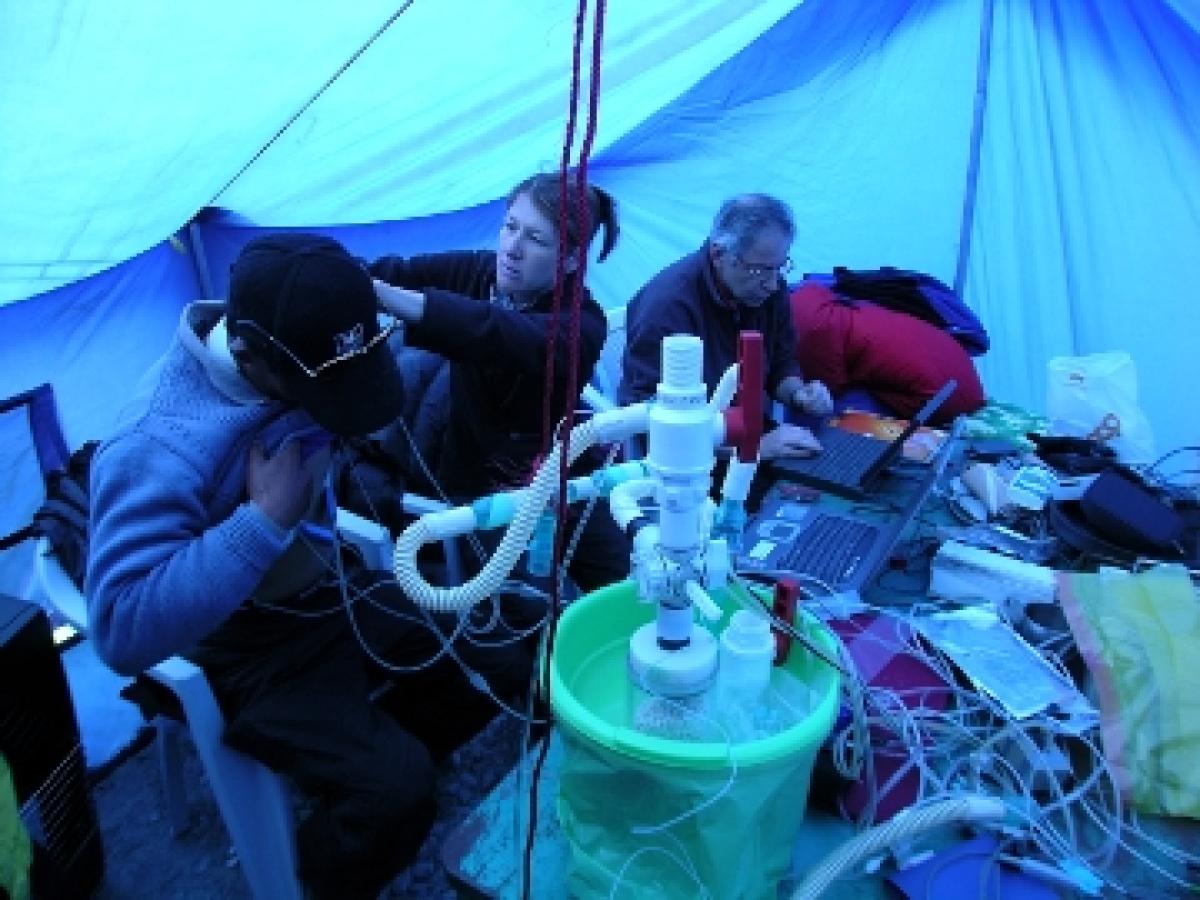
Abnormal periodic breathing commonly occurs when healthy humans sleep at high-altitude, in patients with heart failure, and typically precedes death. Breathing-induced changes in carbon dioxide and brain blood flow during sleep may underpin the condition. By combining sophisticated gold-standard sleep monitoring and imaging techniques with pharmacological intervention, this project aims to examine the mechanisms by which abnormal breathing develops at high-altitude. Data will be collected at sea-level and following ascent to high-altitude (Pyramid). Likely mechanisms underlying the development of periodic breathing at high-altitude will be examined, namely:
- elevation in ventilatory sensitivity to CO2;
- reduction in cerebrovascular reactivity to CO2;
- destabilizing influence of changes in cardiac output during sleep.
The outcomes of this integrative research study will have important implications for the understanding of periodic breathing in all contexts, including chronic heart failure. In particular, the study aims to test the following hypotheses:
- Indomethacin will reduce cerebrovascular reactivity to CO2, thereby reducing the buffering capacity to H+ provided by changes in cerebral blood flow and increasing the susceptibility for central sleep apnea;
- Acetazolamide will provide an effective means to treat central sleep apnea due to improvement in brain oxygenation mediated via a metabolic acidosis-induced rise in ventilation and cerebral blood flow.