


Proseguono in Gilgit-Baltistan le attività dedicate allo sviluppo di un modello di turismo sostenibile e comunitario nell’ambito del progetto Water for Development – W4D.
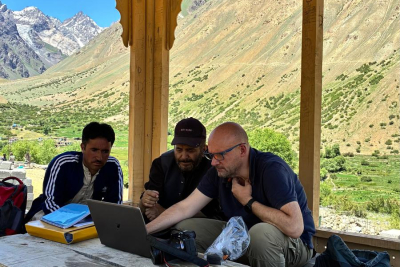
In questi giorni Michele Locatelli, architetto e collaboratore di EvK2, è nuovamente in Pakistan per una missione sul campo che coinvolge diverse località della regione e che permetterà di verificare lo stato di avanzamento delle attività già avviate e di pianificare i prossimi interventi.
La missione prende avvio da Skardu, dove Locatelli incontra il Department of Tourism della University of Baltistan (UoBS) per proseguire il confronto sulle attività legate allo sviluppo turistico del territorio.
Il 1° ottobre il programma prevede un sopralluogo a Chillim, nell’area di Astore, dedicato allo spazio destinato a un piccolo museo, mentre tra il 2 e il 3 ottobre la missione proseguirà ad Askole, importante porta di accesso alle grandi montagne del Karakorum, per approfondire il lavoro relativo alla valorizzazione dello spazio museale locale. Il 4 ottobre è previsto il rientro a Skardu, prima della partenza dal Pakistan il giorno successivo.
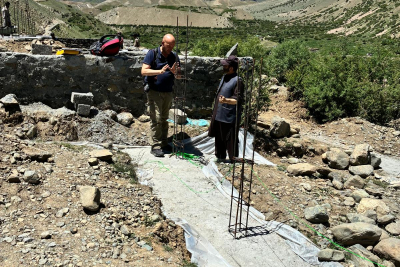
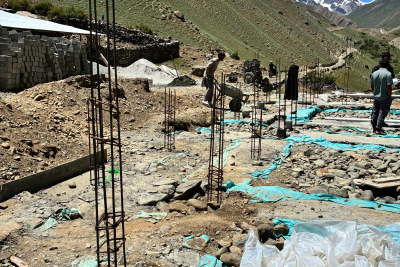
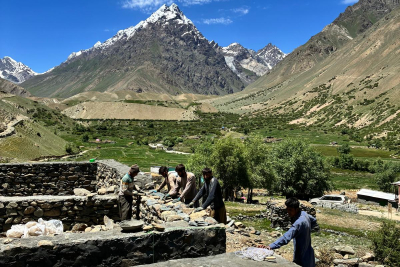
Una tappa centrale della missione è nuovamente la Thalay Valley, dove Locatelli incontrerà la comunità locale e verificherà l'avanzamento dei lavori della Model Guest House, una delle iniziative sviluppate nell'ambito di W4D per promuovere forme di ospitalità sostenibile capaci di generare opportunità economiche per le comunità locali e, allo stesso tempo, valorizzare il patrimonio naturale e culturale della valle.
Il progetto della struttura ricettiva si inserisce infatti in un programma più ampio che comprende la definizione di linee guida per il turismo sostenibile, la mappatura di itinerari e strutture turistiche, la valutazione delle infrastrutture esistenti e la formazione di guide, portatori e operatori locali.
Durante questa nuova missione proseguirà anche il mapping di alcune strutture turistiche del Gilgit-Baltistan, con l'obiettivo di raccogliere informazioni utili alla pianificazione delle future attività. Parallelamente saranno definiti i contenuti e l'organizzazione dei prossimi workshop dedicati agli operatori e alle comunità locali.
Le attività nella Thalay Valley, ad Astore e ad Askole concorrono così a un percorso comune: costruire un modello di turismo di montagna che parta dalle risorse già presenti sul territorio, dalla sua identità e dal coinvolgimento diretto delle comunità, integrando ospitalità, patrimonio culturale, formazione e sviluppo locale.
La missione si svolge nell'ambito di Water for Development – W4D, progetto finanziato dal Ministero degli Affari Esteri e della Cooperazione Internazionale attraverso l'Agenzia Italiana per la Cooperazione allo Sviluppo (AICS) e implementato da EvK2 e UNDP Pakistan.
Activities aimed at developing a model of sustainable, community-based tourism are continuing in Gilgit-Baltistan as part of the Water for Development – W4D project. Michele Locatelli, architect and EvK2CNR collaborator, is currently back in Pakistan for a field mission covering several locations across the region. The mission provides an opportunity to assess the progress of activities already underway and to plan the next steps. The mission begins in Skardu, where Locatelli is meeting with the Department of Tourism at the University of Baltistan (UoBS) to continue discussions on activities related to tourism development in the region. On 1 October, the programme includes a visit to Chillim, in the Astore area, to assess the space intended for a small museum. Between 2 and 3 October, the mission will continue to Askole, an important gateway to the great mountains of the Karakorum, where Locatelli will further explore plans for the enhancement of the local museum space. He will return to Skardu on 4 October before leaving Pakistan the following day. A key stage of the mission is once again the Thalay Valley, where Locatelli will meet with the local community and assess progress on the Model Guest House, one of the initiatives developed within W4D to promote sustainable forms of hospitality capable of generating economic opportunities for local communities while enhancing the valley’s natural and cultural heritage. The guest house is part of a broader programme that includes the development of sustainable tourism guidelines, the mapping of routes and tourism facilities, the assessment of existing infrastructure, and training activities for local guides, porters and tourism operators. During this new mission, the mapping of selected tourism facilities in Gilgit-Baltistan will also continue, providing useful information for the planning of future activities. At the same time, the content and organisation of the next workshops for local operators and communities will be defined. The activities in the Thalay Valley, Astore and Askole are therefore part of a shared approach: developing a model of mountain tourism based on existing local resources, the identity of the territory and the direct involvement of communities, integrating hospitality, cultural heritage, training and local development. The mission is being carried out within the framework of Water for Development – W4D, a project funded by the Italian Ministry of Foreign Affairs and International Cooperation through the Italian Agency for Development Cooperation (AICS) and implemented by EvK2CNR and UNDP Pakistan.Sustainable tourism and local development: a new W4D mission in Gilgit-Baltistan